
Why EV Batteries Need High-Quality Nickel for Range and Safety
EV battery nickel must be high quality to deliver energy density, range, stability, safety and long life. See why, and where LFP batteries fit in.

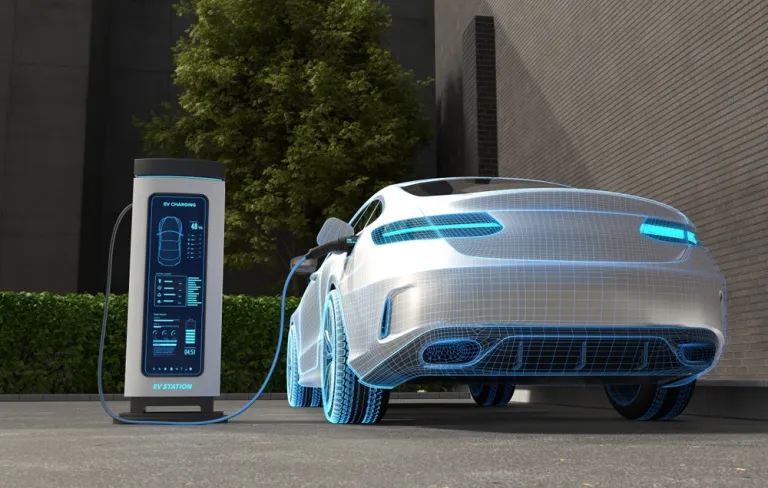
- EV batteries need high-quality nickel because nickel plays a key role in raising a battery's energy density.
- The better the quality of the nickel used, the better the chance that a battery delivers stable performance, longer range and a longer service life.
- Nickel is widely used in the cathodes of lithium-ion batteries such as NMC and NCA, especially for electric vehicles that need a lot of power.
- Low-quality nickel can disrupt the production of battery materials, reduce efficiency and raise the risk of performance problems.
- Demand for nickel in batteries remains important, even though the market is also seeing growth in LFP batteries, which do not use nickel.
Contents
- The Role of Nickel in EV Batteries
- Why Does Nickel Quality Matter So Much?
- Nickel Helps Increase EV Range
- High-Quality Nickel Supports Battery Stability
- Nickel Is Needed for NMC and NCA Cathodes
- EV Growth Is Driving Battery Demand
- High-Quality Nickel Affects Battery Life
- High-Quality Nickel Is Important for Safety
- Not All EVs Use Nickel-Based Batteries
- Indonesia and the Nickel Opportunity for EV Batteries
- Conclusion
The Role of Nickel in EV Batteries
Nickel is one of the key materials in electric vehicle (EV) batteries. In lithium-ion batteries, nickel is typically used in the cathode, especially in NMC (nickel manganese cobalt) and NCA (nickel cobalt aluminum) batteries.
The main job of nickel is to help raise a battery's energy density. Energy density is a battery's ability to store energy in a given size and weight. The higher the energy density, the more energy can be stored without making the battery too large or too heavy.
The University of Texas at Austin explains that the role of nickel in the future of EV batteries is quite clear, because nickel is more abundant than cobalt and has a higher energy density, which can support longer driving range. The source writes, “its higher energy density means longer driving distances between charges.” This quote underlines that nickel is directly tied to an electric vehicle's range.
Why Does Nickel Quality Matter So Much?
EV batteries cannot use just any nickel. The battery industry needs nickel with a certain level of purity and certain characteristics so that it can be processed into stable cathode material. High-quality nickel is needed because EV batteries work under demanding conditions: they must store a lot of energy, deliver power consistently, withstand repeated charging cycles and stay safe in use.
If the nickel does not meet the standard, cathode production can be disrupted. Too high a level of impurities can affect the chemical structure of the battery material. The effects can show up in energy storage capacity, thermal stability, service life and battery safety.
That is why nickel for batteries is judged not only by quantity but also by purity, consistency and how well it suits the needs of the cathode industry.
Nickel Helps Increase EV Range
One of the main reasons EV batteries need high-quality nickel is the demand for range. Electric vehicle buyers want cars that can go farther on a single charge. To achieve that, battery makers need to raise energy capacity without adding too much weight to the vehicle.
Nickel helps meet this need. Cathodes with a high nickel content can store more energy. That is why nickel-based batteries are widely used in electric vehicles that put performance and range first.
However, high nickel content also brings technical challenges. Nature Sustainability notes that strategies for increasing battery capacity have long relied heavily on raising nickel content. But nickel-rich cathodes can suffer electrochemical degradation more quickly because of structural instability. In other words, nickel is important for capacity, but the quality of the material and the design of the cathode must be tightly controlled.
High-Quality Nickel Supports Battery Stability
EV batteries must be stable. Stability matters because batteries work in many conditions, from fast charging and hot weather to long trips and intensive daily use. High-quality nickel helps battery makers produce cathode material that is more consistent and easier to control.
In nickel-based batteries, problems such as degradation, micro-cracks in cathode particles, loss of capacity and overheating can occur if the material is not designed well. That is why the battery industry needs nickel that meets strict standards, so the chemical processes inside the battery cell run more stably.
The University of Texas at Austin also stresses that although nickel offers higher energy density, it comes with challenges in cycle stability, thermal stability and safety. This means that the higher the performance target for a battery, the more important the quality of the raw material and the processing technology become.
Nickel Is Needed for NMC and NCA Cathodes
NMC and NCA batteries are widely used in the EV industry because they combine energy capacity, performance and efficiency. In both types of cathode, nickel is the main component that determines the battery's character.
In NMC, nickel works together with manganese and cobalt. Nickel helps raise energy capacity, manganese supports structural stability, and cobalt helps maintain performance and service life. In NCA, nickel works together with cobalt and aluminum to produce a high-energy battery.
Because the chemistry is complex, nickel quality has to be watched closely. Inconsistent material can make battery production results unstable. The battery industry needs raw material that can be processed precisely, not just raw mined ore.
EV Growth Is Driving Battery Demand
The need for high-quality nickel is also shaped by growth in the electric vehicle market. The International Energy Agency (IEA) notes that battery demand for the energy sector reached a milestone of 1 TWh in 2024. The IEA also says EV battery demand grew to more than 950 GWh, up 25% from 2023.
The data shows that the battery industry is growing very fast. As battery demand rises, so does the need for quality materials. Battery makers need not only large volumes of supply but also raw material that meets high quality standards.
High-quality nickel matters because the EV market cannot chase quantity alone. Electric vehicles must be safe, durable, efficient and trusted by consumers.
High-Quality Nickel Affects Battery Life
Battery life is one of the key factors in an electric vehicle. A battery whose capacity drops quickly lowers the vehicle's value, adds maintenance costs and reduces consumer confidence.
Nickel quality affects a battery's long-term performance. If the cathode material is more stable, the battery can hold its capacity longer after many charging cycles and much use. Unstable material, on the other hand, can speed up the loss of capacity.
Nature Sustainability explains that nickel-rich cathodes face challenges from electrochemical degradation triggered by structural instability. This shows that material quality and cathode engineering largely determine how durable a battery is.
High-Quality Nickel Is Important for Safety
Safety is an absolute requirement in EV batteries. A battery stores a large amount of energy in a relatively compact space. If the battery material is unstable, the risk of overheating, reduced performance or cell failure can rise.
High-quality nickel helps reduce these risks, because purer and more consistent raw material is easier to process into stable cathode material. But nickel alone is not enough. Battery safety also depends on cell design, the cooling system, battery management, the electrolyte and production controls.
That is why high-quality nickel is one important foundation, but it still has to be backed by good battery technology.
Not All EVs Use Nickel-Based Batteries
Although nickel is important, not every EV battery uses it. LFP (lithium iron phosphate) batteries use neither nickel nor cobalt. This type of battery is growing more popular because it is more competitively priced, stable and suited to mid-range electric vehicles.
The Associated Press notes that EV makers are starting to move to LFP batteries, which reduce the need for nickel and cobalt. The AP also says LFP batteries are used in almost half of all EVs, according to IEA findings.
Still, nickel-based batteries keep an important place, especially for vehicles that need longer range, high performance and large energy density. So the need for high-quality nickel has not disappeared, but it is becoming more selective.
Indonesia and the Nickel Opportunity for EV Batteries
Indonesia holds an important position in the global nickel supply chain. The U.S. Geological Survey describes Mineral Commodity Summaries 2025 as the first comprehensive source of data on world mineral production for 2024, including nickel. The report is an important reference for understanding global nickel production, reserves and trends.
The National Battery Research Institute also notes that nickel is increasingly being used in place of cobalt as a key material in lithium-ion batteries, especially for EV batteries. The NBRI says rising global demand for nickel in batteries opens up potential for Indonesia to build a strong battery economy.
The opportunity is big, but the condition is clear. It is not enough for Indonesia to produce nickel ore alone. The industry must be able to produce high-quality nickel material that meets battery needs, including through refining, processing, ESG standards and strict quality control.
Conclusion
EV batteries need high-quality nickel because nickel plays a large role in raising a battery's energy density, range, stability and performance. Nickel is a key material in NMC and NCA cathodes, especially for electric vehicles that need a lot of power and longer range.
However, high-quality nickel must also be processed with the right technology. Nickel-rich cathodes face challenges in stability, safety and service life. That is why the quality of the raw material, the refining process, the cathode design and production controls must all work together.
Even as LFP batteries grow more popular, nickel-based batteries remain relevant for EV segments that need high performance. For Indonesia, the nickel opportunity in EV batteries is very large, but real added value can be achieved only if the industry can produce battery-grade nickel, not just sell raw material.