What Is 3M VHB Tape? Uses, Benefits and How to Apply It
3M VHB tape is a double-sided adhesive for industrial applications. Learn its uses, benefits, how to apply it and tips for choosing a product at Sinar CS.

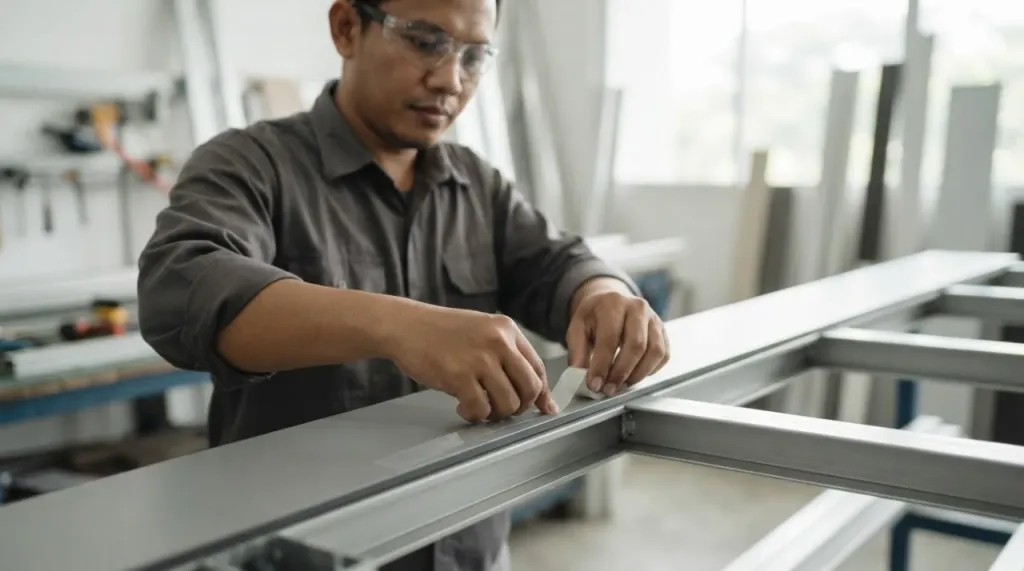
3M VHB Tape is a high-performance double-sided adhesive tape designed to bond a wide range of materials with a strong, lasting hold. VHB stands for Very High Bond. Depending on the specifications of each variant, it can be used for panel assembly, electronic components, automotive work, signage and construction.
Contents
Key Takeaways
- 3M VHB Tape is a high-performance double-sided adhesive tape for joining materials.
- VHB stands for Very High Bond, which describes the adhesive's ability to form a strong bond.
- In certain applications that have been designed and tested for it, the product can be an alternative to screws, rivets or welding.
- It is used in the electronics, automotive, construction and household appliance industries, as well as in panel and signage fabrication.
- Its advantages can include high adhesion, the ability to conform to surfaces, neat-looking joints, and environmental resistance in certain variants.
- Choosing a product means considering the material, load, temperature, environmental conditions, tape thickness and the intended use.
- Surface preparation and pressure during application affect the quality of the adhesive bond.
Introduction
In industrial manufacturing and assembly, the choice of joining method affects the quality of the final product. Screws, bolts, rivets and welding are still needed in many applications. But some designs call for a joining method that is neater, more flexible and more efficient.
One solution worth considering is 3M VHB Tape, a double-sided adhesive tape from 3M developed to form strong bonds on a variety of materials. It is used in many applications, from mounting panels and vehicle components to assembling electronic devices. 3M states that VHB Tape can be an alternative to mechanical fastening in suitable applications.
However, not every type of 3M tape has the same characteristics. Each series is designed with a particular adhesive formulation, thickness and technical capability. So understanding the functions, advantages, limits of use and how to choose a product is an important step before using it in production.
What Is 3M VHB Tape?
3M VHB Tape is a high-performance double-sided adhesive tape that uses adhesive technology to join two material surfaces. VHB stands for Very High Bond. Unlike ordinary tape for everyday needs, VHB Tape is designed for assembly and joining applications that need a stronger, longer-lasting bond.
Many 3M VHB Tape variants use an acrylic adhesive and a foam core that can conform to certain surface conditions. This combination helps the tape make adhesive contact with the material while also helping to distribute stress along the joint area.
According to 3M product information, VHB Tape is used in many applications, including building panels, electronic components, vehicles, household appliances and signage. Whether it suits a given use still depends on the series specifications and the application conditions.
What Does VHB Mean in 3M VHB Tape?
VHB means Very High Bond, the term 3M uses for its family of high-performance adhesive tapes. The name refers to the product's aim of forming a strong bond across a range of assembly needs.
The actual characteristics cannot be determined from the VHB name alone. Users still need to check the technical data sheet (Technical Data Sheet or TDS) for the product number they have chosen, including the recommended materials, bond strength, temperature resistance and application conditions.
What Is the Difference Between 3M VHB Tape and Regular Double-Sided Tape?
Both have an adhesive surface on each side, but they are designed for different needs.
| Aspect | 3M VHB Tape | General double-sided tape |
|---|---|---|
| Intended use | High-performance joining and assembly | Light mounting up to specialized applications, depending on the type |
| Construction | Many variants use an acrylic adhesive with a foam core | May use foam, film, tissue or other backing materials |
| Ability to conform to surfaces | Depends on the thickness and the product series | Depends on the construction and the type of adhesive |
| Applications | Industrial, panels, electronics, automotive, signage and construction | Home, office, crafts and even industry |
| Environmental resistance | Determined by the specifications of each variant | Determined by the specifications of each product |
Keep in mind that not every double-sided tape performs poorly, and not every VHB tape suits every application. A fair comparison has to be made between two products with comparable functions, working conditions and technical specifications.
Uses of 3M VHB Tape Across Industries
The main function of 3M VHB Tape is to bond two material surfaces as part of mounting, joining or assembly. Here are a few examples of how it is used.
1. Joining Metal Panels
In the metal manufacturing industry, 3M VHB Tape can be used to attach panels, trim, decorative elements or supporting components to suitable surfaces.
In certain applications, using tape can reduce the need for screw or rivet holes. This helps keep the surface looking neater. Even so, the joint design must still take into account the load, direction of force, bonded area and operating conditions.
2. Assembling Electronic Components
In the electronics industry, some VHB Tape variants are used to bond bezels, display components, decorative elements and certain parts of electronic devices.
Choosing a product for electronics means considering the thickness, shock absorption, resistance to environmental conditions, and any need for repair or disassembly. Not every series suits every electronic component.
3. Automotive and Transportation Industries
VHB Tape can be used in certain applications in the automotive and transportation industries, such as mounting trim, emblems, panels and decorative components.
Double-sided adhesive can help reduce the need for visible mechanical fasteners. However, components that experience vibration, temperature changes, water exposure or dynamic loads require proper product selection and testing.
4. Mounting Signage and Displays
In making information boards, signage and commercial displays, VHB Tape can be used to bond visual elements or panels to compatible surfaces.
Certain variants, such as the transparent series, can be considered when the look of the joint is an important part of the design. For example, 3M VHB Tape 4910 is designed for applications that need a transparent joint and can be used on materials such as glass, metal and some types of plastic.
5. Construction and Building Assembly
In certain construction applications, the VHB Tape family is used to join panels, certain glass systems and architectural components that are designed to use the adhesive.
Its use must follow the project's design and safety requirements. For structural or safety-related applications, do not use tape as a substitute for other fastening methods without technical validation and the necessary approvals.
Advantages of 3M VHB Tape
The advantages of 3M VHB Tape can help improve the efficiency and quality of the assembly process when the product chosen fits the needs of the application.
1. Forms a Strong Adhesive Bond
VHB Tape is designed to form a strong bond on compatible materials. The final performance is affected by the type of adhesive, the surface characteristics, the application pressure, the temperature and the time after application.
For that reason, claims about bond strength should refer to the technical data of the product series being used, not just to the VHB category in general.
2. Helps Produce a Neat Appearance
In suitable applications, using tape can reduce the need for screws, bolts or rivets that show from the outside. The result can be a cleaner surface and joints that stand out less.
This benefit matters for decorative panels, signage, trim and product components where appearance is a priority.
3. Can Conform to Certain Surfaces
VHB variants with a foam core can help conform to certain surface irregularities. This ability depends on the thickness, flexibility and design of the product.
For large gaps, very rough surfaces or materials with low surface energy, special evaluation is needed so the bond can form properly.
4. Supports a More Efficient Assembly Process
In applications designed for adhesive, applying tape can eliminate some of the steps that mechanical methods require, such as drilling or certain finishing processes.
However, actual efficiency has to be judged across the whole process, including surface preparation, the tools needed, the wait time for the bond to build, and quality inspection.
5. Available in Many Application Variants
The 3M VHB Tape family includes many series with different characteristics. Some products are meant for transparent applications, electronics assembly, panel joining, or industrial processes with particular temperature requirements.
This variety lets users choose a solution based on their real needs, rather than using one type of tape for every job.
How to Choose the Right 3M VHB Tape
Choosing the product is one of the most important factors in getting consistent bonding results. Before you buy, look at the following aspects.
1. Identify the Materials to Be Bonded
Know the two surfaces you will join, for example aluminum, steel, glass, acrylic, polycarbonate or other plastics.
Each material has different surface characteristics. Some plastics, paints or materials with low surface energy may need a special type of adhesive or extra preparation.
2. Determine the Load and Direction of Force
Consider the weight of the component, the bonded surface area, the direction of force, vibration, and possible changes in load during use.
A joint under shear force has different working conditions from one under tension or peel. For applications where failure has serious consequences, carry out an appropriate design evaluation and testing.
3. Check the Working Temperature
If the tape will be used near machinery, electronic devices or environments with temperature changes, check the short-term and long-term operating temperature limits in the TDS.
Do not assume that all 3M VHB Tapes withstand the same temperatures. Temperature resistance during the production process can also differ from resistance once the product is installed and in use.
4. Match the Tape Thickness
Tape thickness can affect its ability to conform to surfaces, how stress is distributed, and the final result of the joint.
A tape that is too thin may not accommodate certain surface conditions, while a tape that is too thick is not necessarily suited to a precision joint design. Choose based on technical recommendations and application test results.
5. Evaluate Environmental Conditions
Consider possible exposure to water, humidity, UV light, chemicals, oil and temperature changes.
Resistance to these conditions depends on the adhesive formulation and the product design. If the application is in a harsh environment, use product-specific technical data and test under conditions close to actual use.
6. Read the Technical Data Sheet
The TDS is one of the main references for judging whether a product is suitable. Check the product number, recommended materials, application conditions, temperature resistance and surface preparation instructions.
You can use the 3M VHB Tape guides and product selector to compare products based on your design needs.
How to Use 3M VHB Tape for the Best Bond
Choosing the right product needs to be paired with the right application procedure. Below are general steps that can serve as a starting guide; the product's own instructions remain the main reference.
Step 1: Clean the Surface
Make sure both surfaces are free of dust, oil, water and other contaminants that could interfere with adhesive contact.
3M states that a mixture of isopropyl alcohol (IPA) and water is commonly used to prepare many surfaces before applying VHB Tape. However, the cleaning method must be matched to the type of material and the contaminant. Follow the safety guidelines for the cleaning product you use.
Step 2: Make Sure the Surface Is Dry
After cleaning, let the surface dry completely before applying the tape. Liquid residue or contaminants can interfere with bond formation.
On certain materials, such as plastic or painted surfaces, a primer or special treatment may be needed. Do not use one automatically without checking compatibility.
Step 3: Apply the Tape in the Right Position
Apply the tape to the planned area. Avoid touching the adhesive surface too much, stretching the tape excessively, or letting air bubbles form.
Make sure the position is correct before the two components are brought together, especially in production processes that require dimensional accuracy.
Step 4: Apply Even Pressure
Press the tape evenly so the adhesive makes good contact with the surface. For industrial applications, a pressing tool or roller can help produce consistent pressure.
The amount of pressure and how it is applied should follow the product guidelines and the shape of the component.
Step 5: Allow Time for the Bond to Build
Adhesion can increase after the tape is applied because the adhesive keeps making contact with the surface. The initial strength right after application is therefore not always the same as the final strength.
Do not apply the full load too soon without considering the product instructions, especially on joints that carry a load.
Mistakes to Avoid When Using 3M VHB Tape
Some application mistakes can reduce adhesive performance even when the product you use is the right one.
- Skipping surface preparation: dust, oil and contaminants reduce the adhesive's contact with the material.
- Choosing a product based only on thickness or price: the material characteristics, load and working environment also need to be considered.
- Ignoring temperature conditions: the application temperature and operating temperature can affect adhesive performance.
- Applying uneven pressure: poor adhesive contact can cause certain areas of the joint to come loose more easily.
- Loading the joint too soon: the adhesive may not yet have reached the bond level it needs.
- Using the tape outside its specifications: critical applications call for a TDS check, testing and design validation.
If the joint will support a heavy component or serves a safety function, carry out a technical assessment before deciding on the fastening method.
A Relevant Quote
“The bonding surfaces must be well unified, clean and dry.”
The core of 3M's technical guidance is that the surfaces to be bonded need to be stable, clean and dry so the bond can form properly. Surface preparation and application pressure are an important part of the VHB Tape application process.
FAQ About 3M VHB Tape
1. What is the main function of 3M VHB Tape?
Its main function is to join two material surfaces using a high-performance double-sided adhesive. It is used for panels, electronic components, vehicle trim, signage and other industrial applications, depending on the product specifications.
2. Is 3M VHB Tape stronger than regular double-sided tape?
That cannot be concluded from the term double-sided tape alone. VHB Tape is designed for high-performance bonding applications, but the result of a comparison depends on the type of product, the material, the application conditions and the load it carries. Compare the technical data of the relevant products to get an accurate assessment.
3. Can 3M VHB Tape be used on metal?
Yes, a number of VHB Tape variants are designed to bond metals such as aluminum and steel. However, the type of metal, surface coating, load conditions and surface preparation still need to be checked before choosing a product.
4. Is 3M VHB Tape suitable for electronics?
Yes, certain variants are used in assembling electronic devices, including display components and bezels. Choosing a product should take into account the thickness, shock resistance, environmental conditions, and any need for servicing or disassembly.
5. Are all 3M VHB Tapes heat and water resistant?
No. Resistance to temperature and moisture differs by product series. Check the TDS for the temperature limits and recommended environmental conditions. For applications that need protection against water, make sure the joint design and the type of tape have been validated for that purpose.
6. How do I get 3M VHB Tape to stick well?
Clean and dry the surface, use a product that suits the material, apply the tape without stretching it excessively, apply even pressure, and follow the recommended time for the bond to build.
7. Can 3M VHB Tape replace screws or welding?
In certain applications, VHB Tape can be an alternative to mechanical fastening. However, replacement should not be done automatically. The load, joint design, working conditions and safety requirements need to be evaluated first.
8. Where can I buy 3M tape for industrial needs?
You can browse product options on the 3M Tape page at Sinar CS. Check availability, product numbers and technical specifications before ordering so the product fits the needs of your application.
Conclusion
3M VHB Tape is a high-performance double-sided adhesive tape used to join a variety of materials in industrial applications. Its advantages can include a strong bond, neat-looking joints, the ability to conform to certain surfaces, and support for an efficient assembly process.
That said, results depend heavily on the choice of product series, material compatibility, surface preparation, application pressure, temperature and load conditions. For that reason, choosing a 3M VHB Tape should be based on the needs of the application and the product's technical data, not just the brand name.
By understanding these characteristics, companies can evaluate the adhesive solution that fits their production, assembly or component maintenance needs.
Find Your 3M Tape Options at Sinar CS
Looking for 3M tape for manufacturing, electronics, automotive or other industrial applications?
Visit the 3M Tape page at Sinar CS to see product options and find an adhesive that fits your needs.
Before buying, gather information about the materials to be bonded, the temperature conditions, the load and the environment of use. That information will help you choose the right product.