Types of Slope Protection and What Each Is Used For
Explore the main types of slope protection and their uses in preventing erosion, landslides and soil damage to keep the surrounding area stable and safe.

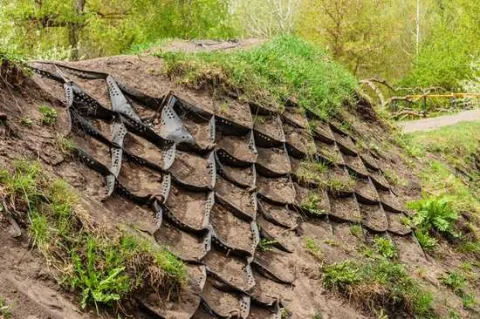
Slope protection refers to the measures taken to prevent or reduce damage to slopes caused by erosion, landslides, or soil collapse. This protection is essential for keeping the soil structure stable, preventing damage to infrastructure, and protecting the lives and property nearby. A range of techniques and materials is used to protect slopes so they can withstand destructive natural forces. This article covers several commonly used types of slope protection and what each is used for in dealing with different soil stability challenges.
1. Planting Vegetation
Planting vegetation is one of the most natural and environmentally friendly slope protection methods. Plants such as grass, trees, and shrubs have strong roots that hold soil in place and prevent erosion. In addition, vegetation helps reduce the speed of the rainwater runoff that can cause landslides.
Uses:
-
Reduces Soil Erosion: Plant roots hold soil particles in place so they are not washed away by flowing water.
-
Improves Soil Quality: Plants feed the soil through the decomposition of dead leaves and roots.
-
Maintains Ecosystem Balance: Vegetation can support local flora and fauna and increase biodiversity on the slope.
However, this method needs long-term care, and the plants' resilience to extreme weather needs attention.
2. Geotextiles
Geotextiles are synthetic materials used to reinforce soil structure on slopes. They can help prevent erosion, manage drainage, and strengthen soil stability. Geotextiles are widely used in large construction projects and in landslide-prone areas.
Uses:
-
Improved Slope Stability: Geotextiles can strengthen soil structure and prevent the shifting of soil layers that could cause landslides.
-
Water Management: Some types of geotextile act as filters that regulate water flow on the slope, preventing standing water that could speed up erosion.
-
Easy to Install: Geotextiles are relatively easy to install on various soil types and can be adapted to a project's specific needs.
Geotextiles are an effective long-term solution, but installation and maintenance costs can be quite high.
3. Retaining Walls
A retaining wall is a man-made structure designed to hold back soil and prevent slope movement. It can be made from various materials such as concrete, stone, or metal, depending on the project's characteristics and the stability required.
Uses:
-
Holding Back Soil Movement: Retaining walls are very effective at holding back soil movement caused by gravity, especially in areas with steep slopes.
-
Dealing With Soil Subsidence: Retaining walls are also used to prevent soil from sinking or washing away on steep slopes, keeping the soil stable in the area.
-
Improving Infrastructure Safety: In large infrastructure projects such as highways, bridges, or high-rise buildings, retaining walls are used to reduce the risk of damage from landslides.
However, using retaining walls requires careful planning and a strong structure, because the load on the wall must be distributed well.
4. Geogrids
Geogrids are a type of material made from polymers and used to reinforce slopes. Geogrids work by reinforcing the soil in the slope, increasing its strength and stability by spreading the loads the soil receives.
Uses:
-
Increased Soil Strength: Geogrids improve the soil's ability to bear loads, preventing unwanted soil movement.
-
Long-Term Stability: Using geogrids can give longer-lasting soil stability than relying on other techniques alone, such as planting vegetation.
-
Cost Efficiency: Geogrids are relatively cheaper than retaining walls and can be used in many applications, such as highway projects and other construction areas.
Although effective, geogrids must be applied correctly to work optimally in holding a slope.
5. Drainage Systems
A good drainage system is vital in slope protection because collected rainwater can erode soil and cause landslides. A good drainage system carries water away effectively, preventing the buildup of water that can damage the slope structure.
Uses:
-
Preventing Water Buildup: Good drainage helps reduce the water pressure that can cause soil collapse.
-
Reducing Erosion: By directing water away from the slope, a drainage system prevents further erosion.
-
Improving Slope Stability: Without proper drainage, the soil on a slope can become saturated and more prone to landslides. A drainage system prevents this by keeping soil moisture at an ideal level.
Drainage systems must be designed carefully to make sure they work, and regular maintenance is needed to avoid blockages.
6. Riprap
Riprap is a layer of large stones placed on a slope surface to protect it from erosion caused by water. This stone layer acts as a barrier that spreads the energy of flowing water, preventing further erosion of the slope.
Uses:
-
Erosion Protection: Riprap is effective at protecting slopes from erosion caused by fast-moving water.
-
Reducing Landslide Impact: By reducing the impact of water flow, riprap can prevent landslides or soil shifting on the slope.
-
Easy to Use in Critical Areas: Riprap is very useful in areas often exposed to heavy rain or river flow, such as slopes near rivers or coastlines.
Although effective for short-term protection, riprap needs regular maintenance and stone replacement, especially after heavy rain.
7. Cover Crops
Cover crops are plants grown on a slope surface to protect the soil from erosion. These plants not only hold the soil with their roots but also shield it from drought and heat that can make soil damage worse.
Uses:
-
Preventing Erosion: Cover crops prevent erosion by covering the soil surface and reducing the direct impact of rain or wind.
-
Reducing Soil Wear: Besides protecting against erosion, these plants also help improve soil structure and increase fertility.
-
Reducing Evaporation: These plants help reduce water evaporation from the soil surface, keeping soil moisture in place.
Planting cover crops is an eco-friendly, low-cost solution for slope protection.
Conclusion
Slope protection plays a vital role in keeping soil stable and preventing damage from erosion and landslides. The various protection methods, from planting vegetation and using geotextiles to retaining walls and drainage systems, each have their own uses and strengths. Choosing the right method must take into account factors such as soil type, slope gradient, and local climate. With the right approach, slope protection can ensure that construction projects last and protect the environment and the lives around them.