
Types of Meteor Showers and When to See Them Each Year
A meteor shower happens when Earth crosses comet or asteroid debris. See 5 well-known types of meteor showers, when each one peaks and how to watch them.

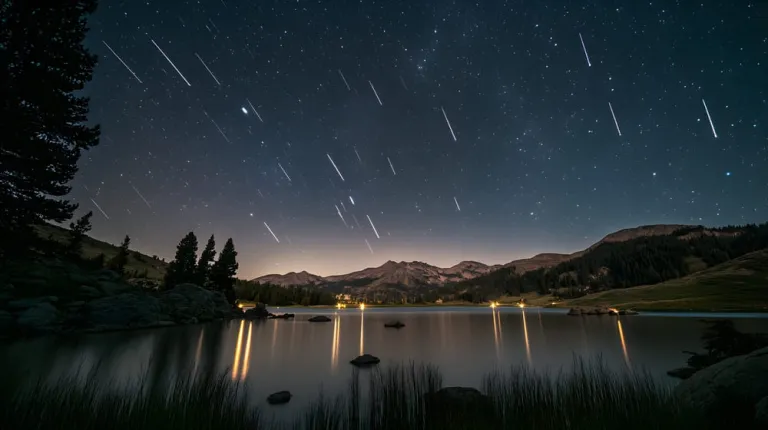
Meteor showers always draw attention because they put on a spectacular sky show that rarely happens in daily life. To understand the phenomenon fully, here are the key takeaways to know from the start:
- A meteor shower happens when Earth crosses the trail of dust left by a comet or asteroid
- Each meteor shower has a fairly fixed annual period
- A meteor shower is named after the constellation it appears to come from
- Meteor showers differ in intensity, depending on how dense the particles are
- The best time to watch is usually the early morning hours, under a dark sky
Contents
What Is a Meteor Shower?
A meteor shower is an astronomical phenomenon in which a large number of meteors appear to cross the sky within a certain period. A meteor itself is a small particle from outer space that burns up as it enters Earth's atmosphere.
According to NASA, “Meteor showers occur when Earth passes through the debris left behind by comets or asteroids.” This statement makes clear that a meteor shower is not something that falls from the sky at random, but part of a cosmic path that already exists.
When these particles enter the atmosphere at high speed, friction with the air produces a bright light that can be seen from Earth's surface.
How a Meteor Shower Forms
The formation of a meteor shower starts with a comet orbiting the Sun. As the comet nears the Sun, the ice and dust it is made of begin to vaporize and leave a trail of particles along its orbit.
When Earth crosses this trail, the particles enter the atmosphere and burn up, creating the phenomenon we know as a meteor shower.
The American Meteor Society explains, “The particles can be as small as a grain of sand, yet they produce bright streaks of light.” This shows that the particles are very small, yet the visual effect is very large.
5 Well-Known Types of Meteor Showers
Every meteor shower has its own characteristics, in terms of intensity, timing and the comet it comes from. Here are some of the best-known types of meteor showers.
Perseids
The Perseids are among the most popular meteor showers. They usually occur every August.
The main features of the Perseids are:
- High intensity, reaching more than 50 meteors per hour
- Bright, fast light
- Easy to see in the Northern Hemisphere
The Perseids come from Comet Swift-Tuttle, which leaves a trail of dust along its orbit.
Geminids
The Geminids are known as the most consistent and spectacular meteor shower. Occurring every December, this shower comes from the asteroid 3200 Phaethon.
Strengths of the Geminids:
- High, steady intensity
- Meteors in a variety of colors
- Relatively slow speed, which makes them easy to see
According to NASA, the Geminids are often considered “the best meteor shower of the year” because of their clarity and numbers.
Quadrantids
This type of meteor shower, such as the Quadrantids, usually occurs in early January and has a very short peak, typically only a few hours.
Its characteristics:
- High intensity in a short time
- Hard to predict precisely
- Needs well-timed observation
This shower comes from an asteroid or comet that has not been fully identified.
Orionids
The Orionids occur every October and come from Halley's Comet, which is also the source of other meteor showers.
Distinctive features of the Orionids:
- Very high meteor speed
- Bright light with long trails
- Best seen after midnight
Leonids
The Leonids are famous for once producing an extraordinary meteor storm.
Main features:
- Peak in November
- Can produce hundreds of meteors per hour under certain conditions
- Come from Comet Tempel-Tuttle
The Leonid meteor storm occurred in 1833 and became one of the most famous astronomical events in history.
When Meteor Showers Happen
Each meteor shower has a fairly fixed annual period because it is tied to Earth's orbit.
Here is the general pattern of timing:
- January: Quadrantids
- April: Lyrids
- May: Eta Aquarids
- August: Perseids
- October: Orionids
- November: Leonids
- December: Geminids
The best time to watch is usually the early morning, from about 2:00 a.m. until just before dawn. At this hour, Earth's position lets more particles enter the atmosphere from the front of its orbit.
Factors That Affect Viewing
Not every meteor shower can be seen clearly. Several factors strongly determine the quality of viewing.
Sky Conditions
A dark sky without light pollution gives the best visibility. Rural or mountain areas are usually ideal locations.
Moon Phase
Bright moonlight can reduce how visible meteors are. That is why the best time is during a new moon or a phase with little moonlight.
Weather
Thick clouds can block the view completely. A clear sky is the main requirement.
Geographic Location
Some meteor showers are best seen in a particular hemisphere, depending on the position of the radiant (the point the meteors appear to come from).
Tips for Watching a Meteor Shower
Watching a meteor shower does not require special equipment such as a telescope. In fact, the best viewing is done with the naked eye.
A few important tips:
- Choose a dark spot far from city lights
- Bring a mat or a lounge chair for comfort
- Let your eyes adjust to the dark for 20 to 30 minutes
- Look at a wide area of the sky, not just one point
Watching a meteor shower is often a reflective moment, because it shows the vast scale of the universe.
Why Meteor Showers Matter in Astronomy
Meteor showers are not only a visual spectacle but also have high scientific value.
Scientists use meteor showers to:
- Study the composition of comets
- Understand the dynamics of the solar system
- Observe how Earth's atmosphere interacts with objects from space
This phenomenon also helps map the paths of cosmic debris that could pose a threat in the future.
A meteor shower is a natural phenomenon that combines visual beauty and scientific value in a single event. By understanding the types and when they occur, anyone can enjoy seeing a sky that looks different from usual. It is also a reminder that Earth is a small part of a cosmic system that keeps moving and interacting dynamically.