Unsung Heroes of History: 5 True Stories Few People Know
Unsung heroes of history rarely reach the textbooks. Meet five people whose courage and sacrifice saved lives, from Irena Sendler to Desmond Doss.

Contents
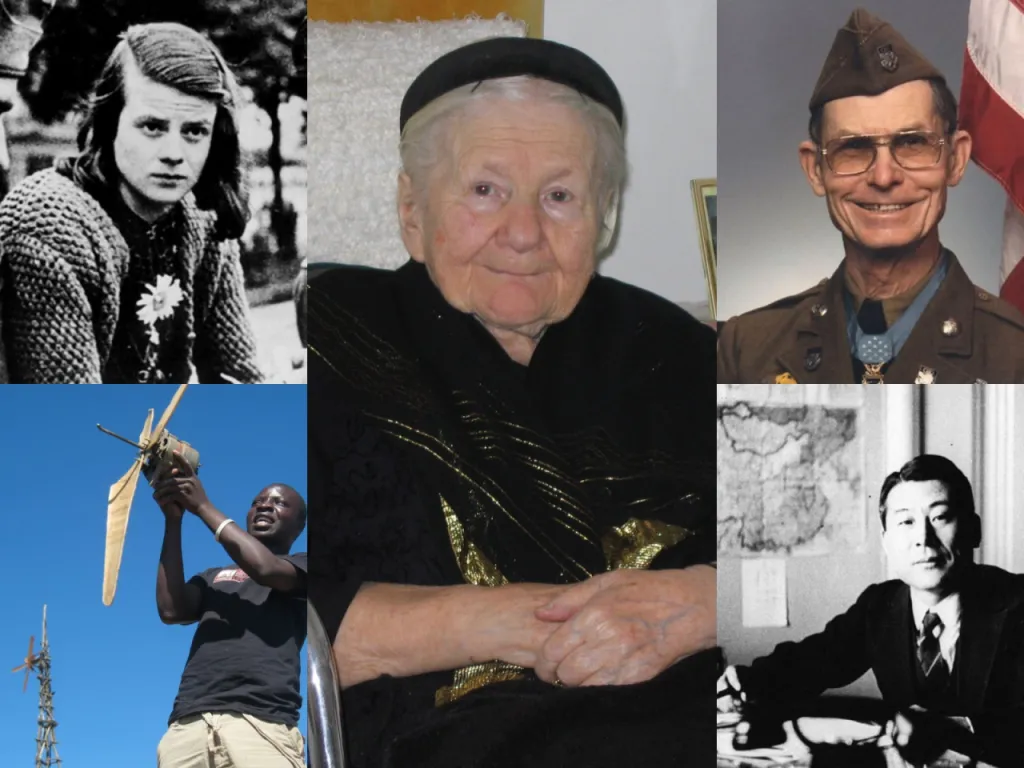
- William Kamkwamba: The Boy Who Powered His Village with a Windmill
- Irena Sendler: The Angel Who Saved Children from the Holocaust
- Sophie Scholl: A Voice of Resistance Against Nazism
- Chiune Sugihara: The Japanese Diplomat Who Saved Thousands of Lives
- Desmond Doss: The Soldier Without a Gun Who Became a War Hero
History tends to spotlight the big names that left a lasting mark on the world. Behind the grand stories we all know, though, there are other tales that are less familiar but just as important and inspiring. This article covers a few true stories of historical figures the public rarely hears about, yet who had a big impact on the course of world history.
1. William Kamkwamba: The Boy Who Powered His Village with a Windmill
William Kamkwamba, a boy from Malawi, was born in a poor, isolated village. When he was only 14, Malawi was hit by a severe drought that brought terrible hunger to his village. William had to drop out of school because his family could not pay the fees. But he did not give in to his circumstances. With a strong drive to learn, William began borrowing books from the local library and found a book about energy.
The book taught William how to build a windmill. Although he had no background in science or technology, William began collecting scrap materials such as bicycle parts, wood and plastic pipes to build a simple windmill. The windmill went on to generate electricity that he used to power lights and run a water pump to irrigate fields.
William's story became a global inspiration after he was invited to speak at the TED Global conference in 2007. His story was turned into a book titled "The Boy Who Harnessed the Wind" and adapted into a film in 2019. Although his name is not as well known as other major figures, William Kamkwamba showed that one small act can change many lives.
2. Irena Sendler: The Angel Who Saved Children from the Holocaust
The name Irena Sendler may not be as famous as Oskar Schindler's, but her service in saving lives during the Holocaust was no less heroic. Irena Sendler was a Polish social worker and nurse who worked in Warsaw during World War II. When the Nazis occupied Poland and began persecuting Jews, Irena joined Zegota, an underground organization dedicated to helping Jewish people.
Using her position as a social worker with access to the Warsaw Ghetto, Irena began smuggling Jewish children out of the ghetto in various ways, including hiding them in toolboxes, coffins and even garbage sacks. She also created false identities for these children so they could be placed in orphanages, convents or non-Jewish families.
In all, Irena Sendler saved about 2,500 Jewish children. Although she was eventually arrested by the Gestapo and tortured, Irena never revealed the identities of the children she had saved. After the war, many of the children she saved were reunited with their surviving families.
Irena Sendler's story became widely known only after it was discovered by a group of high school students in Kansas, in the United States, who wrote a play about her life called "Life in a Jar". Thanks to their efforts, the world began to know Irena Sendler as one of the greatest heroes in the history of humanity.
3. Sophie Scholl: A Voice of Resistance Against Nazism
Sophie Scholl was a young German activist who became a symbol of resistance to the Nazi regime. She was a member of a nonviolent resistance group called the "White Rose", made up of University of Munich students who opposed Hitler's tyranny and the war the Nazis waged.
Together with her brother, Hans Scholl, and several friends, Sophie took part in writing, printing and distributing anti-Nazi leaflets that called for resistance against the totalitarian government. They distributed the leaflets at universities and in cities across Germany, aiming to make the German people aware of the cruelty of the Nazi regime and to encourage resistance.
In February 1943, Sophie and Hans were caught distributing leaflets at the University of Munich. They were tried quickly and sentenced to death by a Nazi court. Sophie Scholl, who was only 21 at the time, showed extraordinary courage to her last moment. Before she was executed, she said, "In the end, one day people will have to pay for our crimes. Nothing can stop our downfall."
Sophie Scholl's legacy lives on as a symbol of moral courage and resistance to tyranny. Although her name and story are less known outside Germany, her courage and sacrifice have inspired many people around the world.
4. Chiune Sugihara: The Japanese Diplomat Who Saved Thousands of Lives
Chiune Sugihara was a Japanese diplomat who, at great risk, saved thousands of lives during the Holocaust. In 1940, Sugihara served as the Japanese consul in Kaunas, Lithuania. As the Nazis began occupying Eastern Europe, thousands of Jewish refugees fled to Lithuania, hoping to get visas to leave the war zone.
Although he had no official permission from the Japanese government, Sugihara, driven by a strong sense of humanity, began issuing transit visas to Jewish refugees. The visas let them cross the Soviet Union and seek asylum in Japan or other countries. For about a month, Sugihara and his wife worked tirelessly writing visas, until he was finally ordered to close the consulate and leave Lithuania.
It is estimated that Sugihara issued about 6,000 visas, which directly saved thousands of lives from the Nazi massacres. After the war, Sugihara was dismissed from the Japanese diplomatic service and lived a modest life. But his heroic act was not forgotten. In 1985, he was recognized as "Righteous Among the Nations" by Yad Vashem in Israel, in honor of his efforts to save Jewish lives during the Holocaust.
5. Desmond Doss: The Soldier Without a Gun Who Became a War Hero
Desmond Doss was an American soldier who became famous for his courage during World War II, especially in the Battle of Okinawa. What makes his story remarkable is that Doss was a Conscientious Objector, someone who refuses to carry weapons or kill on the basis of religious belief. Even so, he joined the US Army as a medic.
During the Battle of Okinawa in 1945, Doss showed extraordinary courage by saving 75 wounded fellow soldiers, all without firing a single bullet. He did this by climbing a cliff under heavy enemy fire, pulling the wounded soldiers up one by one and lowering them to safety.
Desmond Doss became the only Conscientious Objector in United States history to receive the Medal of Honor, the country's highest military award. His life story was captured in the film "Hacksaw Ridge," released in 2016. Doss showed the world that courage and heroism are not always measured by a weapon in hand.
Conclusion
These stories remind us that history is shaped not only by great figures whose names are recorded in textbooks, but also by individuals who, although less well known, did extraordinary things in the face of great challenges. They are true heroes who show that one person can make a significant difference, even in the most difficult circumstances. Their legacy lives on as an inspiration for all of us to be brave, stand firm on principle and act for the good.