
The Mystery of Islands That Move Across the Ocean
Moving islands have fascinated scientists and sailors for centuries. Explore the legends, underwater volcanoes, floating islands and mirages behind them.

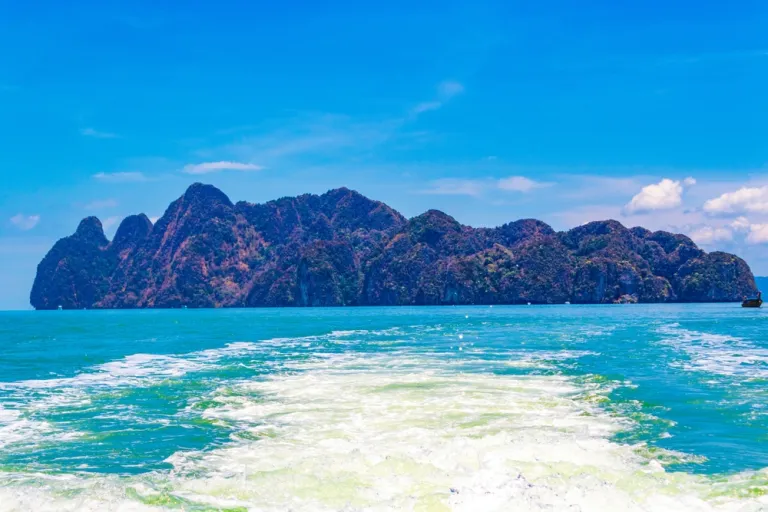
Imagine an island that does not stay put the way islands normally do. It is not tied to a fixed geographic position but travels from one point to another in the middle of the ocean. As if some mysterious force controlled its movement, it has become one of the most puzzling natural phenomena ever recorded. This phenomenon is often called “moving islands,” and it has captured the attention of scientists, adventurers, and the wider public for centuries.
But is it just a myth, or is there a scientific explanation behind it? Let us look more closely at this mystery and find out whether islands that can move really exist in our world.
Read Also: True Stories of Historical Figures the Public Rarely Hears About
The History of Moving Island Sightings
Stories about islands moving from one location to another are actually nothing new. In maritime records, several sailors of the 15th and 16th centuries claimed to have seen mysterious islands that appeared and vanished from view. One of the most famous accounts comes from Portuguese sailors crossing the Atlantic Ocean. They reported seeing a large island, but soon afterward it disappeared without a trace.
In the modern era, some researchers have become interested in finding the truth behind these stories. One location often mentioned as a place where moving islands appear is around the Pacific Islands and the Indian Ocean. Plenty of speculation has arisen: is some extraordinary natural phenomenon making these islands move, or is it just an optical illusion?
Natural Phenomena That Could Make Islands Move
According to scientific studies, several natural phenomena might explain why islands seem to move from place to place.
- Underwater Volcanoes
A moving island may actually be a volcanic island formed by underwater volcanic activity. When a volcano erupts beneath the sea, it can create a new island from cooling lava flows. But the island can sink back into the sea after the eruption stops or if erosion sets in. This process gives the impression that the island appears and disappears with no clear pattern. - Floating Islands
Another phenomenon that might explain the mystery is the floating island, made of a large mass of plants, rock, or soil that has broken away from the seabed. Such an island actually drifts on the water and is carried along by ocean currents. In some places, these floating islands can be very large, giving the impression that they are solid land. Islands like this are often found in the deltas of large rivers or on lakes, but in some cases they have also been seen on the open sea. - Tectonic Movement and Continental Drift
On a much slower scale, islands can change position through the movement of tectonic plates. Although this process takes millions of years, in some cases sudden ground movement from seismic activity can cause significant changes to an island's geographic position. For example, the major earthquake in the Indian Ocean in 2004 moved several islands in the Andaman and Nicobar Islands by a few meters. - Optical Illusions and Air Mirrors
Phenomena such as the fata morgana, or mirage, often occur on the open sea. When certain atmospheric conditions are met, light can bend so that a distant object looks closer, or even seems to float above the water. Under certain conditions, a distant island or ship can appear to move or vanish, creating the illusion that it has changed places.
Myths That Grew Up in Different Cultures
The mystery of moving islands has not only drawn the attention of scientists but has also merged into legends in many cultures. For example, in the Pacific Islands there is a folk tale about Pulomatu Island, believed to be a resting place of the gods that often moves to avoid humans. In Europe, the legend of Brasil Island, or Hy-Brasil, an island said to be visible only once every few hundred years, is also part of maritime lore.
In Indonesia itself, stories of islands that appear and disappear in the middle of the sea can be found in local mythology, especially in coastal areas. Many fishermen believe they have seen mysterious islands that are not marked on any map, but when they approached, the islands vanished into the fog.
Uncovering Fact or Fiction
After weighing the explanations above, can the mystery of moving islands be called fact or fiction? The answer may lie somewhere in between. On one hand, there are real natural phenomena, such as floating islands and underwater volcanic activity, that can explain the temporary appearance and disappearance of islands. On the other hand, optical illusions such as mirages can also trigger reports of moving islands without any clear physical evidence.
Still, to this day there is no concrete evidence that any island has truly moved on a large scale and stayed in its new place. An island that seems to move is more likely the product of natural phenomena or of tricks of the eye.
Conclusion
The mystery of islands that move across the ocean may sound like a fairy tale or an ancient myth, but a range of natural phenomena could provide the scientific basis for these stories. With underwater volcanoes, floating islands, tectonic movement, and mirages, we can understand why some people might report seeing an island move.
Even so, there is still no strong evidence that an island can truly change places permanently. These islands are probably better seen as a reflection of the remarkable wonders of nature, which can sometimes deceive our eyes. This mystery, in any case, remains a draw for explorers and scientists, who keep looking for answers in the vast ocean full of unexpected wonders.